Remodel debris
Kitchen and bathroom remodel dumpsters
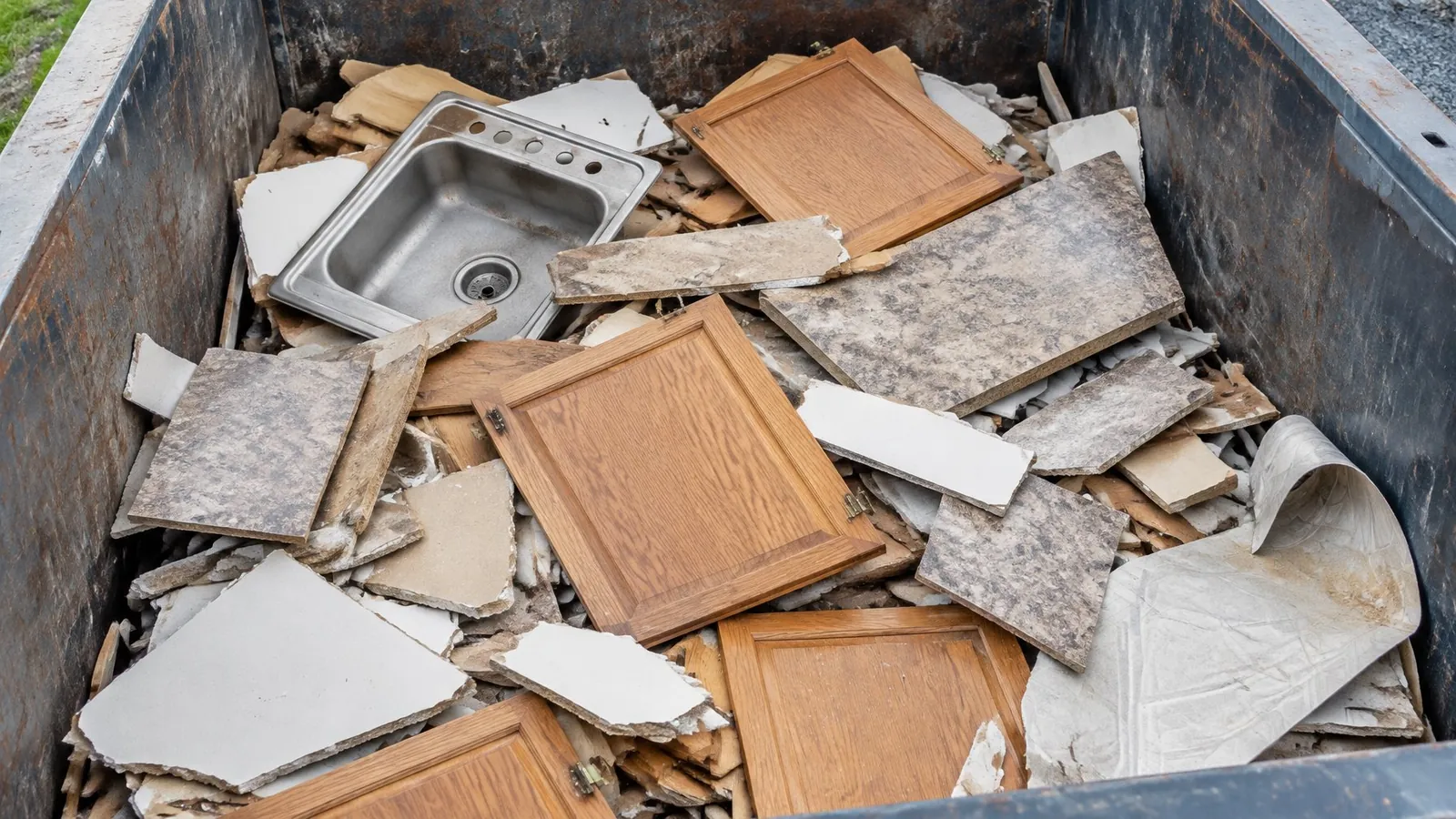
Tearing out a kitchen or a bathroom produces a mix of heavy and bulky debris. Plan for both: cabinets and countertops take space, while tile, mortar beds and plaster add weight fast.
Phones answered Mon–Sat 8 am–8 pm, Sun 8 am–1 pm (Eastern)
What usually fits
Bathroom gut
Tub or shower surround, vanity, toilet, tile and backer board. Often a 10 yard, because tile is heavy.
Kitchen
Cabinets, counters, flooring and a wall or two of drywall. A 15 or 20 yard, depending on the floor.
Both at once
A 20 yard is common, as long as the tile and plaster don't push it past the weight allowance.
Older Grand Rapids houses weigh more
Many homes in the older neighborhoods have plaster on wood lath rather than drywall. Plaster is dense and dusty, and a couple of walls of it can use up a weight allowance. Mention plaster when you call so the company can suggest a smaller, heavier-rated box.
Old floor tile, pipe wrap and some textured ceilings in older homes can contain asbestos. Asbestos removal and disposal fall under rules enforced in Michigan by EGLE, and Kent County's SafeChem list sends questions about friable asbestos to EGLE's local office at 616-356-0500. If you suspect it, have it tested before demolition, not after.
Keep it through the rebuild
Demolition fills most of the container, but installation creates trash too: cabinet boxes, foam, offcuts and old fixtures. If the new cabinets arrive a week after the tear-out, ask for a rental long enough to cover both, or plan a swap.
If your contractor is doing the work, ask whether their price already includes hauling the debris away before you rent a separate container.
Ready to book a roll-off?
Have the address, the project and a rough idea of how much is going in. The company on the phone quotes the size, the drop-off date and the price.
Phones answered Mon–Sat 8 am–8 pm, Sun 8 am–1 pm (Eastern)